

.algorithms

This is all about algorithms! Discover various algorithms, how they work, and example applications that help you understand the topic better.

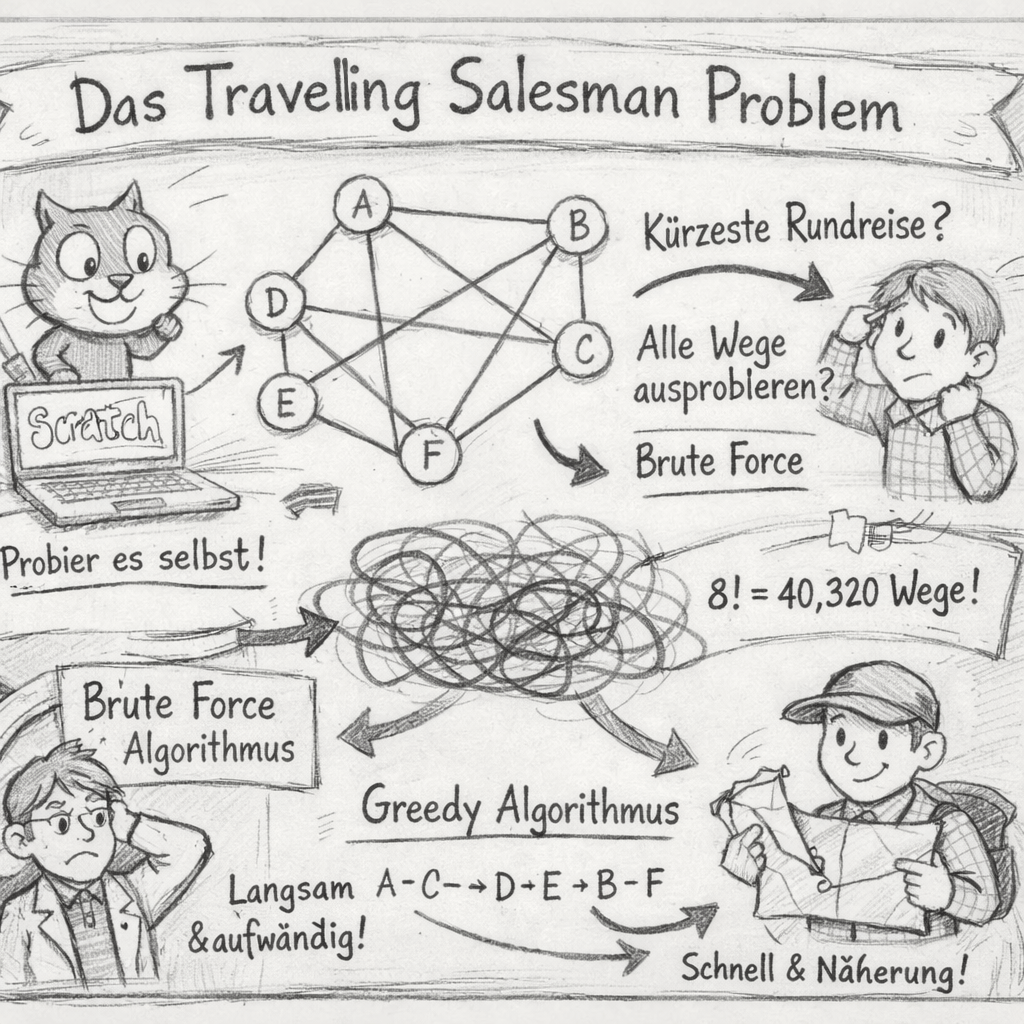
  • Das Travelling Salesman Problem – Eine Challenge für Scratch-Tüftler

    The Travelling Salesman Problem – A challenge for Scratch-Tinker

    Imagine that you are planning a trip through several cities and want to find the shortest route to visit each city exactly once. What at first sounds like a simple task is actually one of the most famous puzzles in computer science: the Travelling Salesman Problem.

    But don't worry, you don't have to be a math genius to face this legendary challenge. On the contrary! We grab our colorful blocks in Scratch and show how to solve this complex problem in a playful and creative way.

    In this article, we take on the Challenge and tinker together on a solution. Are you ready to show the traveler the most efficient way and dive deep into the world of algorithms? Then let's get started

    (more…)
  • k-means-clustering – Entwicklung mit Scratch

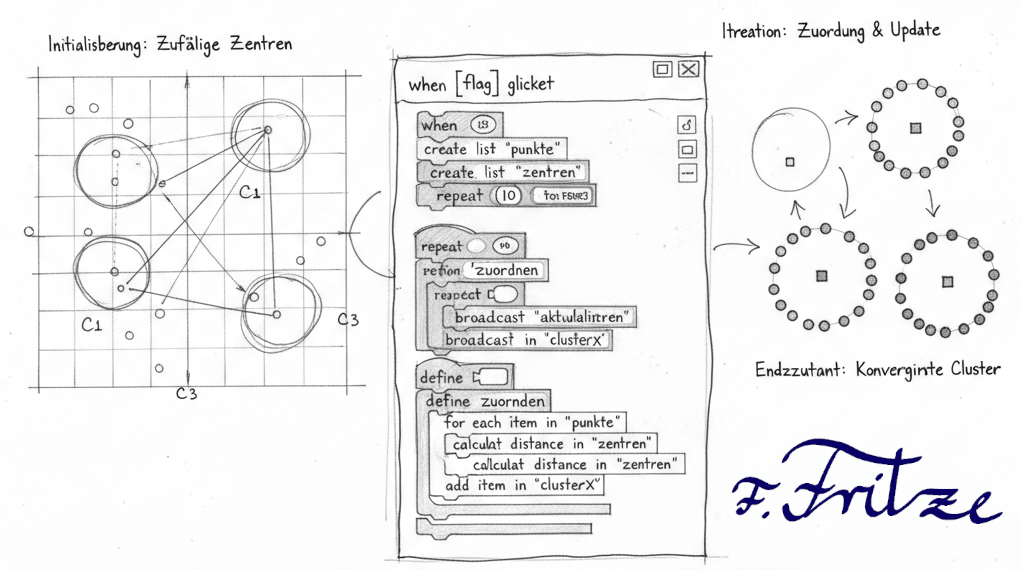
    K-means-clustering – development with Scratch

    K-Means Clustering is a popular algorithm in the field of unsupervised learning, which is used to divide data into groups or clusters. This approach makes it possible to identify patterns in data without requiring prior labels. For an introduction to the topic and a fun board game to illustrate the concepts of unsupervised learning, you can find information on this page. There you will find materials that help you better understand the basics of K-Means Clustering and apply them in practice.

    (more…)
  • Knopfnavigator – Dijkstra unplugged

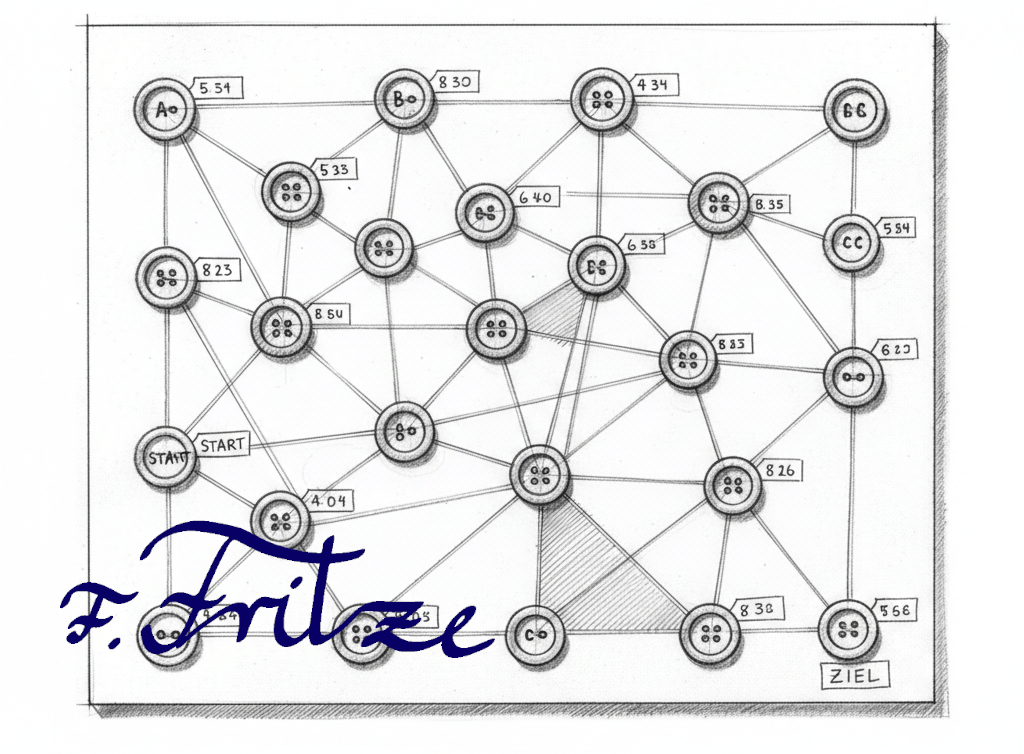
    Button Navigator - Dijkstra unplugged

    The Dijkstra algorithm is an efficient method for determining the shortest path in a graph. It is widely used in networks, route planners, and many applications in computer science. Due to its ability to find optimal solutions, it plays a central role in graph theory and data analysis.

    (more…)
  • Q-Learning – Entwicklung mit Scratch

    Q-Learning – Development with Scratch

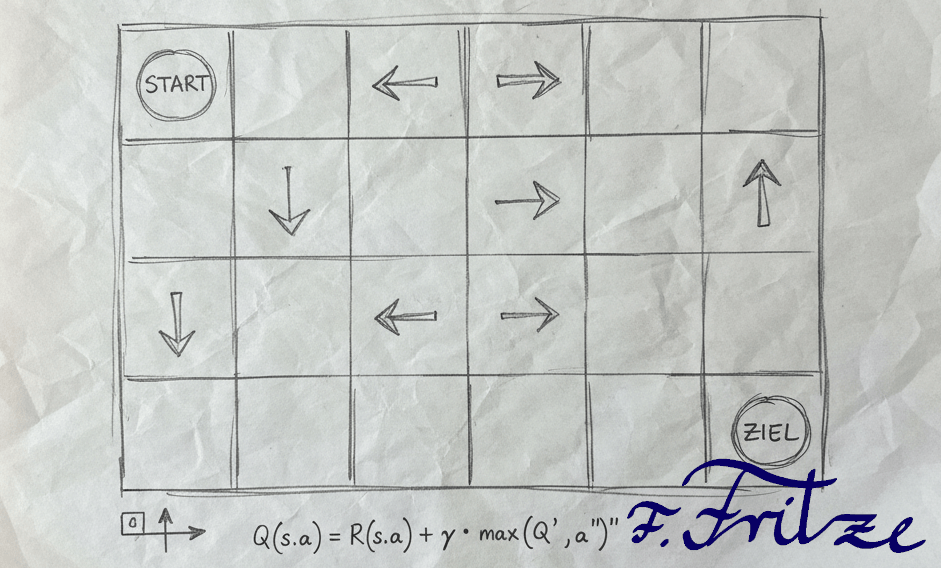
    In this article we outline the development of the QField with Scratch. We start by drawing the playing field and implementing the random movement of Scratch. In the next step, we introduce the Q table, which serves as the basis for reinforcing learning. Finally, we visualize Scratch's decisions through drawn arrows that represent his path on the playing field.

    (more…)
  • Q-Learning – unplugged

    Q-Learning – unplugged

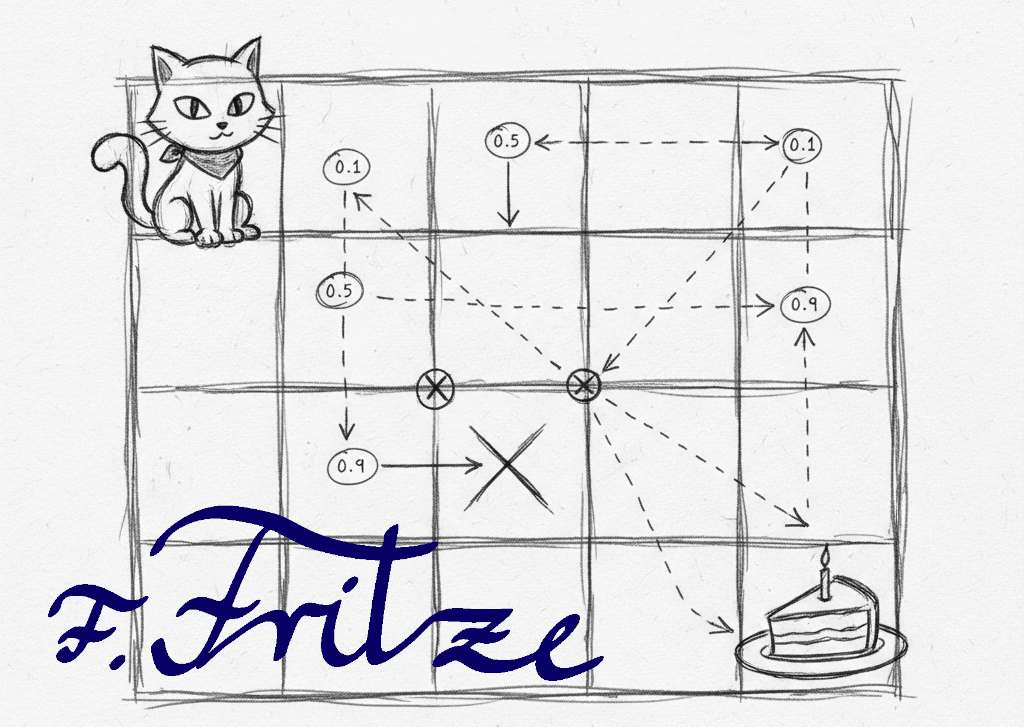
    The QField serves to recreate the process of reinforcement learning with a piece of paper and a pen. This is about learning a way by using the unplugged algorithm. Unlike other algorithms that aim for optimal solutions, this approach focuses on learning through trial and feedback.

    (more…)
  • Reversi als Beispiel für den Minimax-Algorithmus (in Swift Playground)

    Reversi as an example of the Minimax algorithm (in Swift Playground)

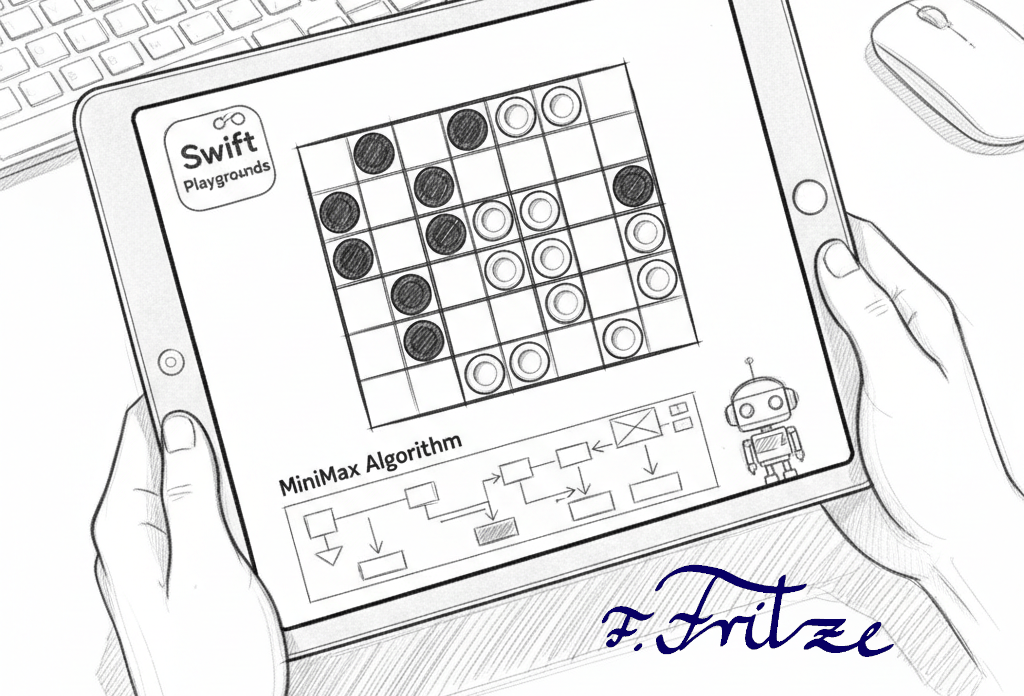
    Reversi, also known as Othello, is a strategic board game for two players played on an 8×8 board. The goal of the game is to have more stones of your color on the board than the opponent.

    (more…)
  • Traversieren von Graphen mit Swift Playground

    Traverse graphs with Swift Playground

    What is a graph?

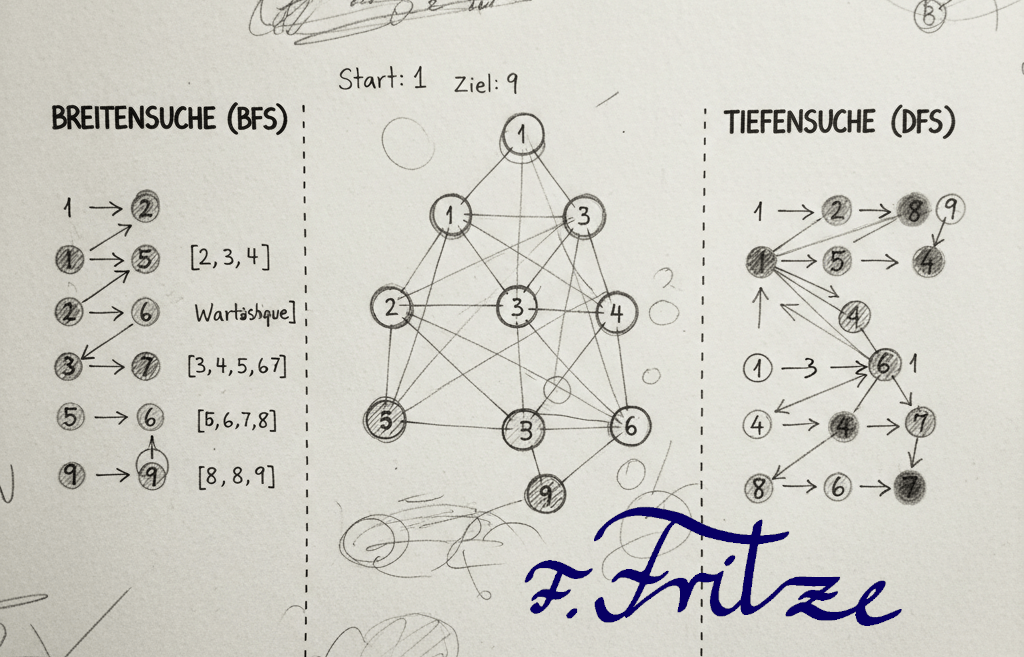
    A graph is a mathematical structure consisting of vertices (nodes) and edges that connect these vertices. Graphs can be used to represent relationships between objects, for example in social networks or traffic networks. They are a central concept in graph theory and are used in many areas of computer science and mathematics.

    (more…)